
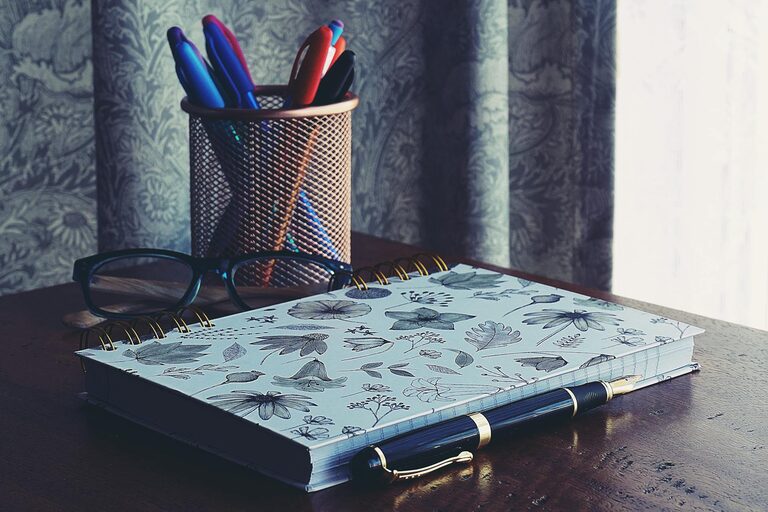
How to Choose a Notebook You’ll Actually Use Every Day
Choosing a notebook might seem like a simple task, but finding one that you’ll truly enjoy using can make a big difference in your productivity and creativity. Whether you want a notebook for journaling, work, school, or personal projects, the right choice can keep you motivated and organized. Here’s a friendly, clear guide to help you pick a notebook that matches your style and needs.
Why Choosing the Right Notebook Matters
Many people start using a new notebook full of enthusiasm, but that excitement can fade if the notebook doesn’t feel quite right. A notebook is more than just paper; it’s a tool for capturing ideas, setting goals, or unloading your thoughts. When your notebook suits your habits and preferences, you’re more likely to use it regularly and feel satisfied with your progress.
Step 1: Identify Your Purpose
Before buying a notebook, think about why you want it. This will guide your choice of size, paper type, and layout.
– Journaling or creative writing? You might want a high-quality paper that handles ink well.
– Taking notes in meetings or classes? A compact size that fits in your bag might be best.
– Planning and organizing tasks? Consider notebooks with pre-printed layouts or dot grids.
– Sketching or doodling? Thicker, smooth paper is ideal.
Step 2: Consider the Notebook Size
Notebooks come in many sizes, from pocket-sized to large sketchpads. Think about where and how you’ll use it.
– Pocket size (around 3.5” x 5.5”): Great for quick notes on the go but may feel cramped.
– A5 size (5.8” x 8.3”): A popular middle ground — portable and spacious enough for detailed notes.
– A4 or larger: Good for lots of writing or drawing but less convenient to carry around.
Choose a size that fits your lifestyle and the amount of content you want to write.
Step 3: Pick the Right Paper and Layout
Paper quality influences how enjoyable it is to write or draw in your notebook.
– Paper weight: Measured in grams per square meter (gsm). Higher gsm means thicker paper, less bleed-through from pens.
– Texture: Smooth paper is better for pens and markers, while textured paper suits pencils and charcoal.
– Color: White paper is standard, but some people prefer cream or off-white shades, which can be gentler on the eyes.
As for layout, notebooks come with various page styles:
– Lined: Great for writing and note-taking.
– Blank: Perfect for sketching or free-form notes.
– Dot grid: Flexible layout useful for bullet journaling and combining writing with drawings.
– Grid: Helpful for technical sketches, tables, or diagrams.
Think about what kind of writing or drawing you’ll do most.
Step 4: Binding and Cover Type
The way a notebook is bound affects how it opens and closes.
– Spiral binding: Allows the notebook to lay flat, which is convenient for both left- and right-handed users.
– Perfect bound (like a paperback book): Gives a sleek look but can be harder to keep open.
– Hardcover: Offers durability and protection; good for heavy daily use.
– Softcover: Lightweight and more flexible but less protective.
Choose based on how you’ll carry and use the notebook.
Step 5: Additional Features to Consider
Some notebooks come with extras that might enhance your experience:
– Numbered pages: Helpful for indexing or referencing.
– Built-in bookmarks or elastic bands: Keep your place easily.
– Pockets: Great for storing loose papers or stickers.
– Perforated pages: Let you tear out sheets cleanly.
– Lay-flat design: Makes it easier to write across the entire page.
Think about which features would suit your workflow.
Step 6: Test Before You Buy
If possible, visit a store to feel the notebook in your hands. Flip through pages to check paper quality and see if the size feels comfortable. Testing different pens on the paper can help you avoid disappointment later.
Step 7: Keep It Simple and Personal
Sometimes, simple notebooks work best. If a notebook has too many features or a layout you don’t like, you might avoid using it. Also, consider personal touches such as customizing your notebook with stickers or a cover sleeve—anything that makes you excited to open it.
Tips for Using Your Notebook Consistently
– Set small goals: Dedicate a few minutes daily or weekly.
– Keep it accessible: Store your notebook where you often work.
– Use it for multiple purposes: Combine notes, sketches, and to-dos.
– Review regularly: Reflect on notes to stay motivated.
Final Thoughts
Choosing a notebook you’ll actually use hinges on matching the notebook’s features to your habits, needs, and style. Take your time exploring options, and don’t be afraid to experiment with different types until you find your ideal match. With the right notebook by your side, writing, planning, and creating can become effortless and enjoyable.
Happy notebook hunting!
